Creating a bee-friendly garden is one of the most rewarding ways to support honeybees, native bees, butterflies, and other important pollinators. Whether you have a large country property, a small backyard, or just a few flower beds, you can create a beautiful outdoor space that provides valuable food and habitat for these remarkable creatures.
Here in North Texas, our changing seasons, warm spring rains, intense summer heat, and occasional periods of drought make choosing the right plants especially important. By selecting flowers that thrive in our Texas climate, we can create colorful gardens that are both beautiful and beneficial to pollinators.
At Odom Honey Hive in Springtown, Texas, we believe a garden should be more than just a place filled with flowers. It can also be a welcoming habitat where nature thrives, honeybees gather nectar, and pollinators find the resources they need to survive.
Why Bee-Friendly Gardens Are Important
Honeybees and other pollinators depend on flowering plants for their survival. Flowers provide two essential resources: nectar and pollen.
Nectar supplies carbohydrates that bees use for energy, while pollen provides proteins, fats, vitamins, and minerals needed for colony growth and development.
As bees move from flower to flower collecting these resources, they transfer pollen between blossoms, helping many plants produce seeds and fruit.
Unfortunately, habitat loss, pesticide exposure, and limited floral diversity can make it difficult for pollinators to find adequate food.
Planting a variety of flowers that bloom during different seasons helps create a more reliable food supply. Even small gardens can contribute valuable resources when combined with other pollinator-friendly areas throughout a community.
The Best Flowers for Honeybees in North Texas
North Texas offers many beautiful flowering plants that can thrive in our climate while providing nectar and pollen for visiting pollinators.
Some excellent choices include:
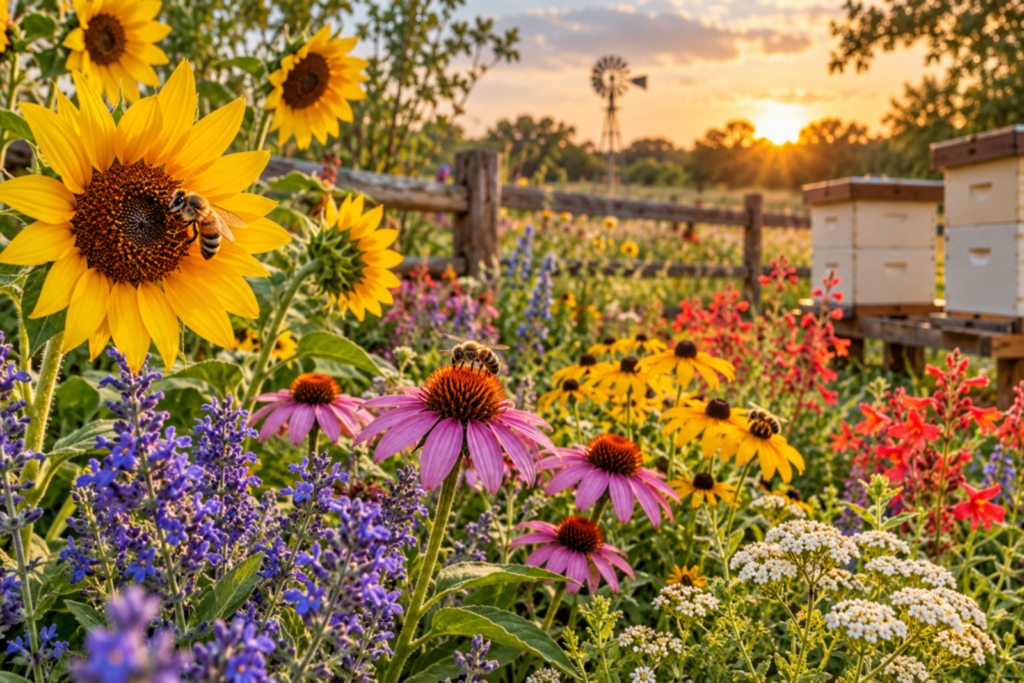
Texas Bluebonnets: Our beloved state flower creates breathtaking displays of blue blossoms during spring. These native wildflowers attract a variety of bees and add unmistakable Texas beauty to gardens and open spaces.
Sunflowers: Bright, cheerful sunflowers are a wonderful addition to pollinator gardens. Open-pollinated varieties with accessible pollen and nectar can attract honeybees, native bees, and other beneficial insects.
Black-Eyed Susans: These golden-yellow wildflowers tolerate heat and provide valuable floral resources for many pollinating insects.
Purple Coneflowers: Known for their beautiful purple petals and prominent centers, coneflowers attract bees and butterflies. Established plants can tolerate periods of dry weather.
Autumn Sage: This hardy, drought-tolerant perennial produces colorful flowers that attract various pollinators, including bees and hummingbirds.
Mealy Blue Sage: With its beautiful blue-purple flower spikes, this Texas native is a wonderful choice for sunny gardens and attracts a variety of bees.
Lemon Beebalm: Also called lemon horsemint, this fragrant native wildflower produces lovely purple-pink flower clusters that are especially attractive to pollinators.
Blanket Flowers: Their cheerful red, orange, and yellow blossoms add vibrant color to Texas landscapes while providing resources for visiting bees.
Goldenrod: These bright yellow, late-season flowers provide important nectar and pollen for many pollinators when other flowering plants are becoming scarce.
Choosing a combination of these plants can create an attractive garden with flowering opportunities across much of the growing season.
Planting for Spring, Summer, and Fall
One of the secrets to a successful bee-friendly garden is providing flowers throughout as much of the year as possible.
Spring: A Fresh Start
Spring brings some of North Texas’s most beautiful wildflowers. Texas bluebonnets, lemon beebalm, and other spring-blooming plants provide valuable resources as pollinators become increasingly active.
Many native wildflower seeds are best planted during fall so they can establish naturally before blooming the following spring.
Summer: Flowers That Love the Heat
Texas summers can be challenging for both plants and pollinators. Choosing heat-tolerant flowers is especially important.
Sunflowers, black-eyed Susans, blanket flowers, and established native salvias can provide colorful blooms during warm weather, although supplemental watering may be necessary during severe drought.
Planting flowers in groups also makes it easier for bees to find and visit multiple blossoms without traveling long distances.
Fall: Preparing for Cooler Weather
Fall-blooming flowers provide valuable resources as honeybee colonies prepare for winter.
Goldenrod, autumn sage, and native asters can offer important late-season nectar and pollen.
A garden that continues blooming into autumn helps support honeybees and other pollinators before winter arrives.
Provide a Safe Water Source for Honeybees
Just like other living creatures, honeybees need water.
During the intense heat of North Texas summers, honeybees collect water to help regulate temperatures inside their hives. They also use water for other important colony activities.
A simple bee-friendly water station can be created using a shallow dish filled with clean water and small rocks, pebbles, or other safe landing surfaces.
The rocks allow bees to stand safely while drinking without falling into deep water.
Place the water source in a quiet area away from heavy foot traffic, and refresh the water regularly to keep it clean and discourage mosquitoes.
Even a small water station can be a helpful addition to a pollinator garden.
Create a Natural and Healthy Garden
A bee-friendly garden should provide more than flowers alone.
Many native bees nest in the ground, hollow plant stems, or small natural cavities. Leaving some undisturbed soil, fallen leaves, and standing plant stems can provide valuable habitat for these pollinators.
Avoid unnecessary pesticide use, especially on flowering plants. Insecticides can harm bees and other beneficial insects, while some herbicides may eliminate the flowering plants they depend on.
Native plants are often excellent choices because they are adapted to local growing conditions and can support a wide variety of native wildlife.
Mulching garden beds can help retain moisture during hot Texas weather, but leaving some patches of bare, well-drained soil is beneficial for ground-nesting native bees.
The goal is to create a healthy balance between a beautiful landscape and a thriving natural environment.
Designing a Bee-Friendly Garden for the Texas Climate
You do not need a large property to make a difference.
A small garden filled with carefully selected plants can provide important resources for pollinators.
When planning your garden, consider these simple ideas:
- Choose a sunny location with suitable drainage.
- Select native and drought-tolerant flowering plants.
- Group similar flowers together to create attractive patches of color.
- Include plants that bloom during different seasons.
- Provide a shallow, dependable water source.
- Allow some natural nesting habitat for native bees.
- Avoid unnecessary pesticide applications.
- Use mulch where appropriate to conserve moisture.
- Choose a variety of flower shapes and sizes to support different pollinators.
For larger country properties, creating several flowering areas around the landscape can provide both beauty and habitat diversity.
A thoughtful garden design can also include rustic pathways, natural stones, wooden borders, and decorative features that complement the beauty of a Texas country setting.
Our Love for Wildflowers at Odom Honey Hive
At Odom Honey Hive, our appreciation for honeybees goes hand in hand with our love for Texas wildflowers, sunflowers, and the natural beauty of the countryside.
Located in Springtown, Texas, we are inspired by the peaceful landscapes, changing seasons, and remarkable relationship between pollinators and flowering plants.
We believe that creating pollinator-friendly habitats is one of the simplest and most meaningful ways to give something back to nature.
Whether planting a single sunflower or designing an entire wildflower garden, every thoughtful effort can help provide resources for honeybees and other important pollinators.
Our passion for beekeeping reminds us that even the smallest creatures have an important purpose in the natural world.
Every Flower Makes a Difference
A bee-friendly garden is more than a collection of beautiful plants. It is a living environment where flowers, honeybees, butterflies, and countless other creatures interact and thrive.
Every blossom provides an opportunity for nourishment. Every visiting pollinator contributes to the natural cycle of life.
By planting flowers, protecting natural habitats, and learning more about the importance of bees, we can all play a part in creating a healthier environment.
At Odom Honey Hive, we believe that a little love, a few wildflowers, and the gentle buzzing of honeybees can make the world a more beautiful place.