
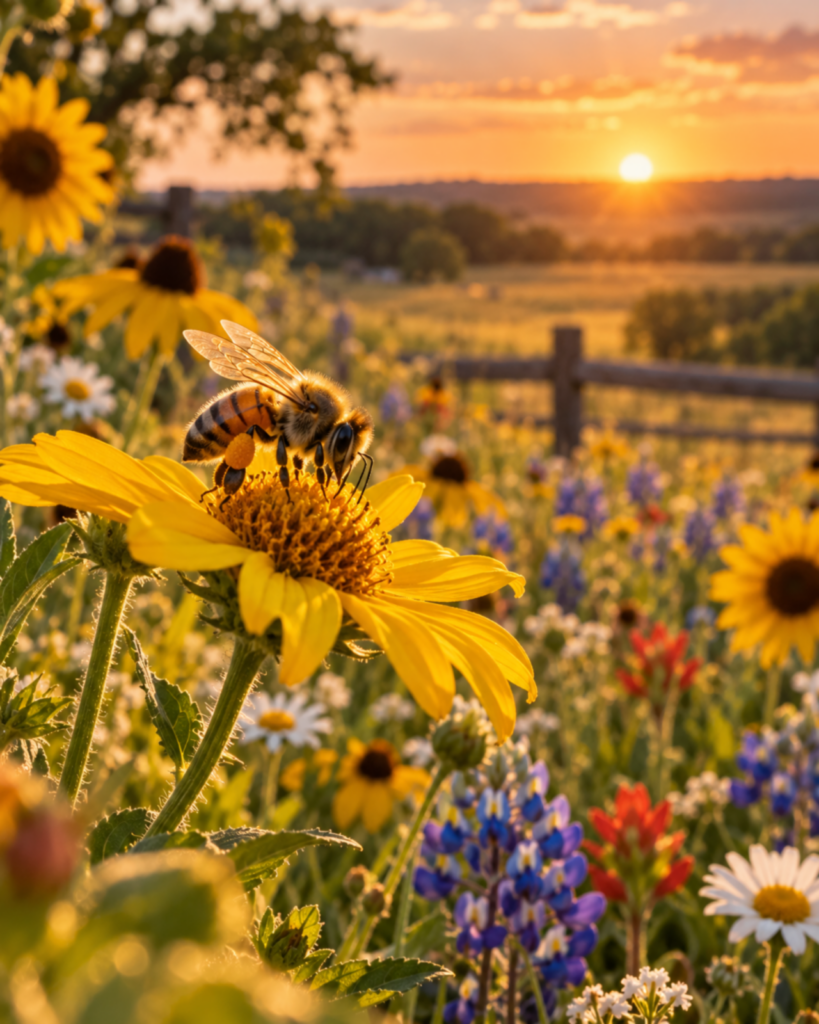
Beekeeping in North Texas is a rewarding journey that connects us with nature, agriculture, and the remarkable world of honeybees. From the beautiful wildflowers of spring to the long, hot days of summer, our Texas landscape provides both wonderful opportunities and unique challenges for beekeepers.
Here in Springtown, Texas, honeybees experience changing seasons, unpredictable weather, and a wide variety of flowering plants. Successful beekeeping requires patience, dedication, and an understanding of how honeybee colonies respond to their environment.
Spring: A Season of Growth and New Beginnings
Spring is one of the most exciting times for beekeepers in North Texas. As temperatures begin to warm, wildflowers bloom, trees produce blossoms, and honeybee colonies become increasingly active.
Worker bees venture outside the hive in search of nectar and pollen, bringing valuable resources back to their growing colonies. During this season, queen bees increase egg production, and healthy colonies may expand rapidly as more young bees emerge.
Spring is also an important time for hive inspections. Beekeepers monitor colony health, check for signs of disease and parasites, ensure the queen is laying eggs, and provide adequate space as their colonies grow.
The arrival of spring also brings the possibility of swarming, a natural process in which part of a colony leaves with a queen to establish a new home. Careful hive management can help reduce unwanted swarming while supporting strong, healthy colonies.
Summer: Helping Honeybees Beat the Texas Heat
North Texas summers can be extremely hot, with temperatures frequently climbing above 100 degrees Fahrenheit. These conditions create special challenges for honeybees and their keepers.
Honeybees work together to maintain suitable temperatures inside their hives. During hot weather, worker bees fan their wings to circulate air and use collected water to help cool the colony through evaporation.
Access to a reliable water source is especially important during our hot Texas summers. Shallow water stations with rocks or other safe landing surfaces can help bees collect water without drowning.
Beekeepers must also watch for reduced nectar availability during periods of intense heat and drought. When flowers stop producing sufficient nectar, colonies may experience a summer nectar dearth, making it important to monitor their food reserves.
Proper hive placement, appropriate ventilation, adequate water, and regular colony inspections all contribute to successful summer beekeeping.
Fall: Preparing the Colony for Cooler Weather
As summer transitions into fall, honeybees begin preparing for the colder months ahead.
Late-blooming plants such as goldenrod and native asters can provide valuable nectar and pollen when available. These flowering plants help support colonies as they build or maintain the food reserves needed for winter.
Fall is an important time for beekeepers to evaluate the strength and health of their colonies. Monitoring Varroa mites, checking stored food supplies, and ensuring the hive has a healthy queen are essential parts of seasonal management.
Healthy colonies with adequate food reserves have a better chance of successfully surviving the winter.
Winter: Protecting Honeybees During Cold Weather
Although North Texas winters are generally milder than those in northern states, sudden temperature drops, freezing rain, strong winds, and occasional winter storms can create difficult conditions for honeybee colonies.
Unlike many insects, honeybees remain active within their hives throughout winter. When temperatures fall, they gather together in a tight cluster, generating warmth through muscular activity and consuming stored honey for energy.
Beekeepers help their colonies prepare by ensuring adequate food reserves, protecting hives from excessive moisture and wind, and minimizing unnecessary disturbances during cold weather.
Even during winter, honeybees may emerge from their hives on warmer, sunny days to take cleansing flights before returning to their colony.
The Importance of Healthy Hive Management
Successful beekeeping involves much more than collecting honey. It requires understanding honeybee behavior, recognizing the needs of a growing colony, and providing appropriate care throughout the year.
Beekeepers regularly inspect their colonies, monitor parasites and diseases, evaluate food reserves, and make adjustments based on seasonal conditions.
One of the greatest threats to managed honeybee colonies is the Varroa mite, a parasite that feeds on developing and adult honeybees and can transmit harmful viruses. Effective monitoring and timely management are essential for maintaining strong colonies.
Responsible beekeeping also means respecting the bees, understanding their natural instincts, and giving them the best possible environment in which to thrive.
North Texas Wildflowers and Honeybees
The natural beauty of North Texas provides many opportunities to support honeybees and other important pollinators.
Spring wildflowers, flowering trees, clover, sunflowers, native salvias, and fall-blooming asters can offer nectar and pollen throughout different parts of the growing season.
Planting a variety of flowering species helps provide a more dependable food supply while adding beauty to gardens, fields, and rural landscapes.
Every season brings new experiences and opportunities to better understand these remarkable insects. From watching bees return to their hives with pollen to observing the fascinating organization of a colony, beekeeping reminds us how much we can learn from nature.
Education, responsible beekeeping, and protecting pollinator habitats are important steps toward ensuring a healthy future for honeybees and the environment. Every bee has a purpose, every hive has a story, and every season brings something new to discover.