
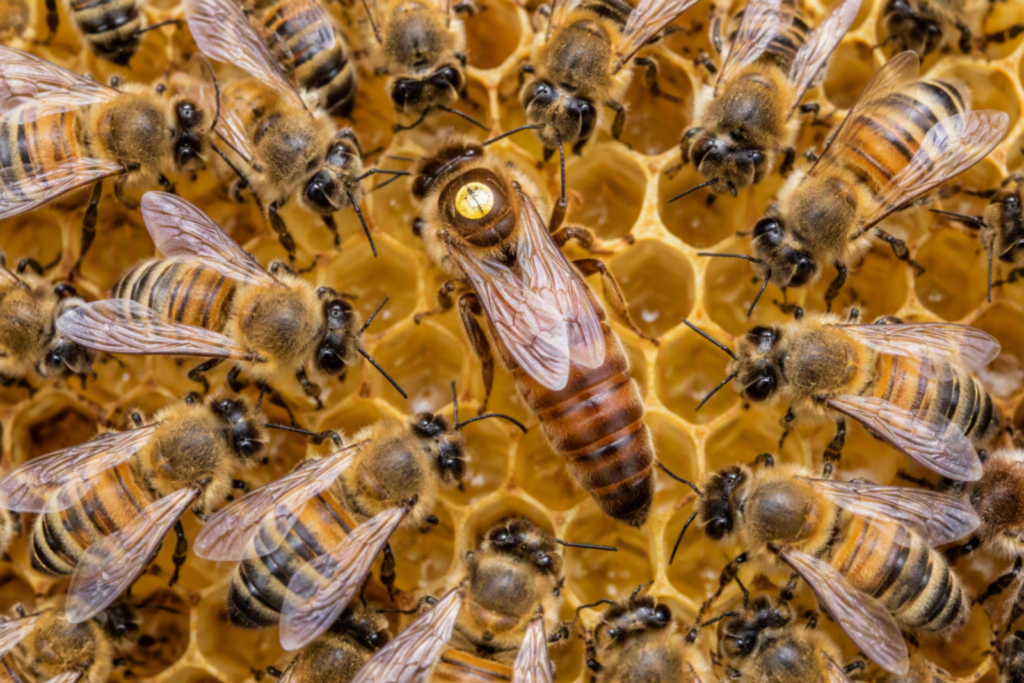
Discover the Incredible Life Inside a Honeybee Hive
A honeybee hive is one of nature’s most remarkable communities. Inside the hive, thousands of bees work together in perfect cooperation to keep the colony healthy and productive. Each hive is made up of three types of bees: a single queen, thousands of female worker bees, and a smaller number of male drones. Every bee has a specific role, helping the colony function like a well-organized society.
The hive itself is a bustling center of activity. Honeybees communicate through a unique movement called the waggle dance, which helps them share the location of food sources with other bees. They also carefully regulate the hive’s temperature by fanning their wings during hot weather and clustering together for warmth when temperatures drop.
One of the most amazing facts about honeybee hives is their efficiency. A single colony may contain more than 50,000 bees, all working together toward a common goal. Through teamwork, communication, and organization, honeybees create a thriving community that produces honey and helps pollinate many of the plants that people and wildlife depend on for food. Their incredible hive is a true wonder of the natural world.
The Queen: Mother of the Colony
At the center of the hive is the queen bee, the largest bee in the colony. Her primary responsibility is laying eggs, and during peak season she can produce thousands of eggs each day. Surrounding the queen are worker bees that constantly care for her, feed her, and protect her. Their dedication ensures the survival and growth of the entire hive
A healthy colony usually has one queen, whose primary responsibility is laying eggs. During favorable conditions, a productive queen may lay more than 1,000 eggs in a day.
The queen also produces chemical signals called pheromones that help coordinate colony activity.
Worker Bees: The Heart of the Hive
Worker bees perform many important jobs throughout their lives. Young workers clean hive cells and care for developing larvae, while older workers gather nectar, pollen, water, and plant resins from the environment. These hardworking bees also build the honeycomb, a structure made from beeswax that consists of perfectly shaped hexagonal cells used for storing honey, pollen, and bee larvae.
Female worker bees perform nearly every job needed to keep the colony running.
Their responsibilities include:
- Cleaning and preparing honeycomb cells
- Feeding and caring for developing larvae
- Producing beeswax and building honeycomb
- Receiving and processing nectar
- Guarding the hive entrance
- Collecting pollen, nectar, water, and plant resins
Drones: The Male Honeybees
Drones are male bees whose primary biological role is mating with a queen from another colony. Unlike female workers, drones do not have stingers and do not collect nectar or pollen for the hive.
Why Is Honeycomb Hexagonal?
Honeybees build their comb from wax using closely packed hexagonal cells. This structure efficiently provides storage space while forming a remarkably strong and organized arrangement.
Honeycomb cells serve several purposes, including raising young bees and storing pollen and honey.
How Bees Keep Their Hive Comfortable
Honeybees carefully regulate conditions inside their colony.
During hot weather, workers fan their wings and use water evaporation to help cool the hive. During colder weather, bees cluster together and produce warmth through muscular activity.
A Thriving Community
Strong colonies can contain tens of thousands of bees during their most productive seasons.
What makes a honeybee colony remarkable isn’t simply its size. It’s the coordination of thousands of individual bees working together to raise young, gather food, build their home, and survive changing seasons.