Honeybees are much more than producers of delicious golden honey. These remarkable little insects play an essential role in supporting agriculture, maintaining healthy ecosystems, and helping flowers, fruits, and vegetables grow. Although small in size, honeybees make an enormous contribution to the natural world, making them one of our most valuable pollinators.
The Importance of Pollination
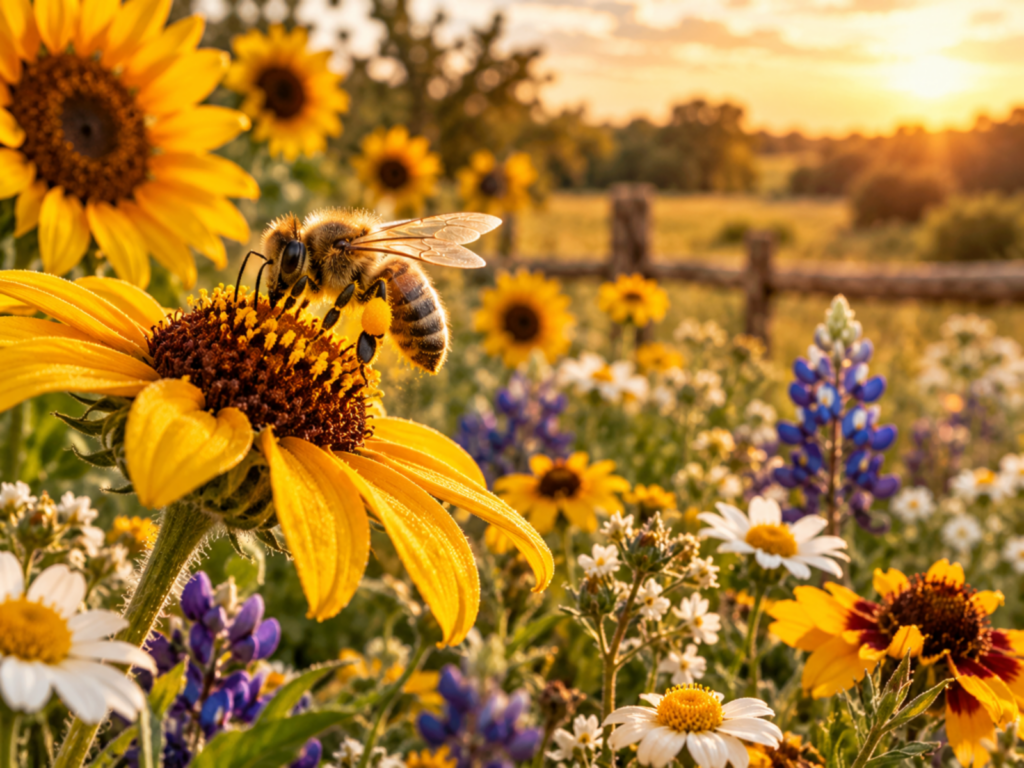
As honeybees travel from flower to flower collecting nectar and pollen, tiny grains of pollen attach to their fuzzy bodies. When they visit another flower, some of that pollen is transferred, allowing many plants to produce seeds, fruits, and new generations of flowers. This natural process is called pollination, and it is essential to the reproduction of many flowering plants.
Honeybees help pollinate important crops such as almonds, apples, blueberries, cucumbers, melons, and pumpkins. In fact, approximately one-third of the food we eat depends on animal pollinators to some degree. While honeybees are important agricultural pollinators, native bees, butterflies, moths, beetles, and other insects also contribute to this essential work.
Honeybees and the Beauty of Texas
Here in North Texas, honeybees visit a wonderful variety of flowering plants throughout the growing season. From spring wildflowers and blooming fruit trees to summer sunflowers and fall asters, these blossoms provide nectar and pollen that help sustain honeybee colonies.
Texas landscapes are also home to many native pollinators that depend on healthy habitats filled with diverse flowering plants. By planting a variety of flowers, preserving natural areas, and reducing unnecessary pesticide use, we can help support honeybees and other beneficial pollinators throughout the seasons.
What Threatens Honeybees?
Despite their importance, honeybees face several challenges. Parasites such as Varroa mites, diseases, pesticide exposure, poor nutrition, and the loss of flowering habitats can weaken colonies and threaten their survival.
Beekeepers play an important role in maintaining healthy managed honeybee colonies by monitoring hive conditions, managing parasites, providing adequate nutrition when necessary, and ensuring their bees have suitable living environments.
Protecting wild pollinators is equally important. Preserving native plants, nesting habitats, and natural landscapes helps support the many species of bees that contribute to healthy ecosystems.
How We Can Help Protect Pollinators
Everyone can make a difference in supporting honeybees and other pollinators. Even a small backyard garden can provide valuable food and habitat for visiting bees.
Planting nectar-rich flowers, choosing native plants, allowing different flowers to bloom throughout the year, providing shallow water sources, and avoiding unnecessary pesticide applications are simple ways to create a more pollinator-friendly environment.
A Small Creature Making a Big Difference
The next time you see a honeybee buzzing among the flowers, remember that it is doing much more than collecting nectar. It is helping plants reproduce, supporting agricultural crops, and contributing to the health of our environment.
Every flower visited and every grain of pollen carried is another reminder of how closely connected we are to the natural world.
At Odom Honey Hive, we believe that protecting pollinators begins with understanding and appreciating the remarkable world of bees.